🖼️
Meet the artists behind some of the wildest, most colorful art in the world — and try their style yourself.
1912–1956
The artist who put his canvas on the floor and danced around it, dripping and splattering paint.
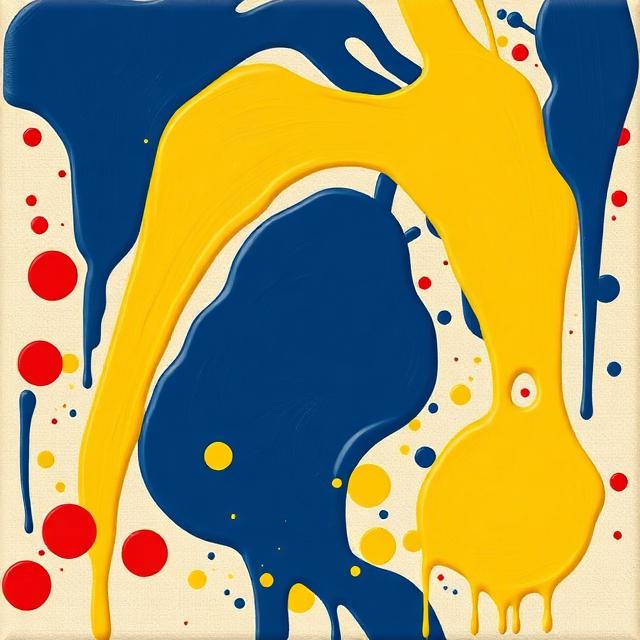
Illustration in the spirit of Jackson Pollock's drip paintings
Jackson Pollock grew up out west and later moved to New York. He became famous for a brand-new way of painting: instead of standing at an easel with a brush, he laid huge canvases on the floor of his barn studio and walked around them, dripping, flicking, and pouring paint from above. People called him 'Jack the Dripper.'
Giant canvases covered in swirling, layered drips and splatters of paint — chaotic up close but balanced when you step back.
- He used sticks, dried-out brushes, and even turkey basters to fling paint.
- His most famous paintings are so big they can fill an entire wall of a museum.
- His paintings have secret patterns called 'fractals' — the same kind of patterns you see in trees and lightning.
1948
A huge drip painting in browns, yellows, and grays — once one of the most expensive paintings ever sold.
1950
A massive painting full of swirling black, white, and tan splatters.
1952
Bright reds, blues, and yellows splashed across an enormous canvas.
- Big piece of paper or old white sheet
- Washable tempera paint, 3–4 colors
- Plastic spoons or old paintbrushes
- Old clothes + a tarp or grass to work on
- Lay your paper flat on the ground outside or on a tarp.
- Dip a spoon into one paint color and flick it over the paper — don't touch the paper!
- Switch colors and walk around the paper, dripping from different sides.
- Let it dry, then step way back and find shapes hidden in your drips.
1928–1987
The artist who turned soup cans, soda bottles, and movie stars into bright, repeating pop art.
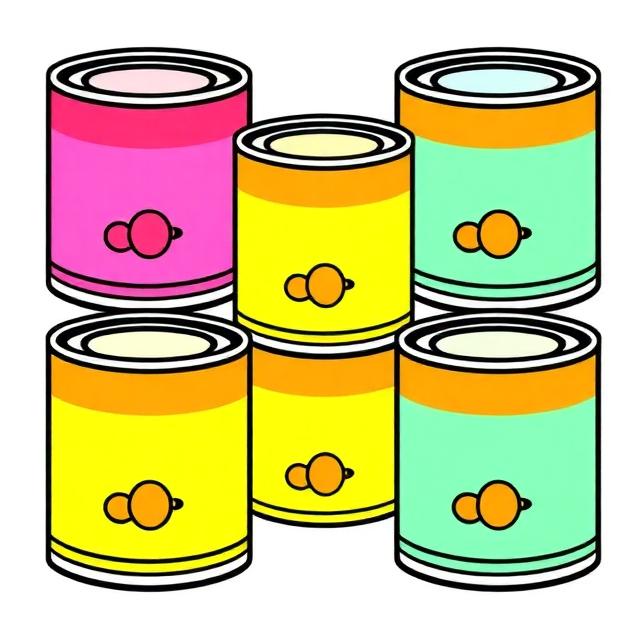
Illustration in the spirit of Andy Warhol's pop art
Andy Warhol grew up in Pittsburgh, Pennsylvania and became one of the most famous artists of the 1900s. He helped invent a style called Pop Art, which means making art out of everyday things like cans, comics, and celebrities. His New York studio was called The Factory because he made so much art there with his friends.
Bright, repeating images of everyday objects and famous people, often printed in candy colors using a method called silkscreen.
- He once made a whole series of paintings of Campbell's Soup cans — 32 of them, one for each flavor.
- He liked the color silver so much he covered his entire studio in silver foil.
- He kept a pet dachshund named Archie that came to work with him.
1962
32 small paintings, one for every soup flavor Campbell's sold at the time.
1962
Fifty repeated portraits of the movie star Marilyn Monroe in bright colors.
1967
A famous yellow banana he designed for a rock band's album cover.
- White paper
- A photo or simple drawing
- 4 bright markers or crayons
- Pencil
- Fold a piece of paper into 4 equal squares.
- Draw or trace the same simple picture (a face, a piece of fruit, your pet) in each square.
- Color each square using a different bright color combo — pink + yellow, blue + orange, etc.
- Step back and look at them all together — that's a pop art grid!
1958–1990
The artist who covered subways and city walls with dancing figures, glowing babies, and barking dogs.
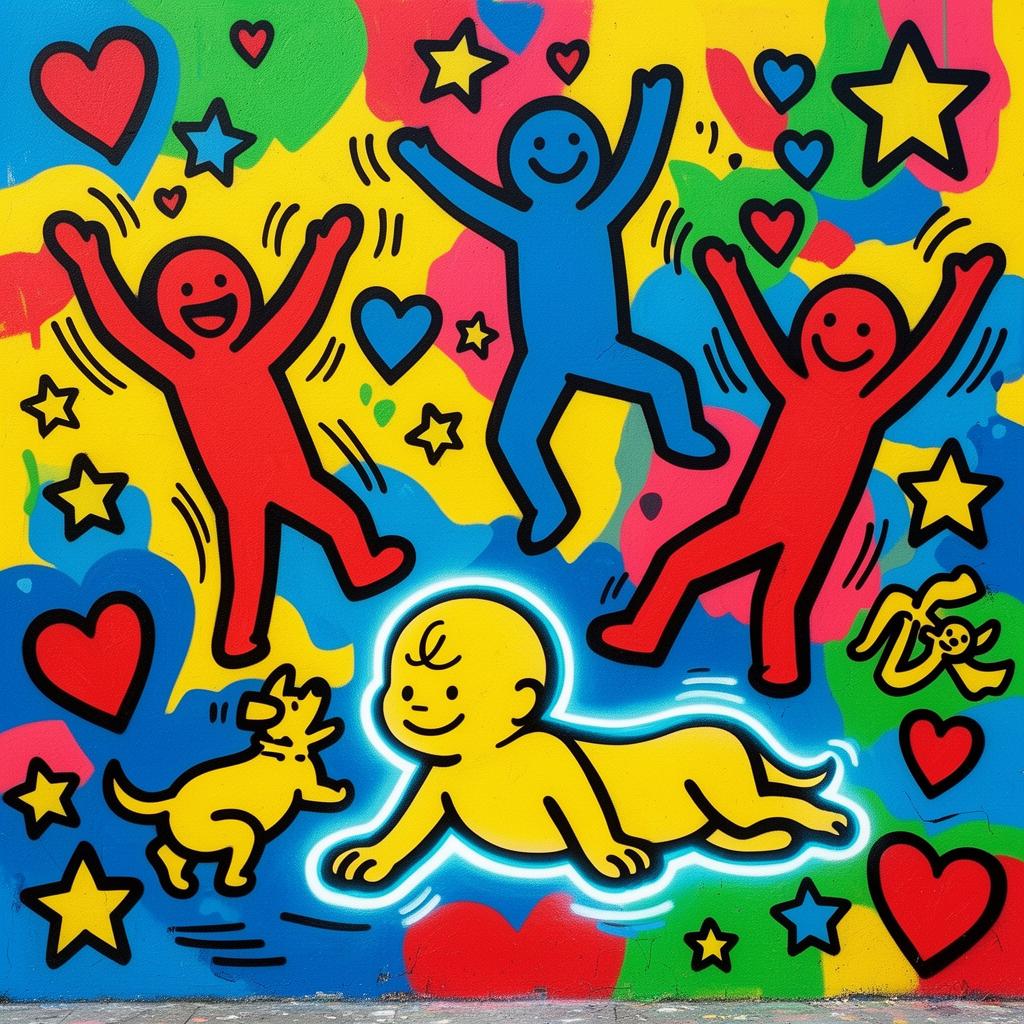
Illustration in the spirit of Keith Haring's dancing figures
Keith Haring loved cartoons as a kid and grew up to draw all over New York City. He started by chalking white drawings on empty black subway ad spaces so everyone — not just people in fancy galleries — could see his art. His pictures look simple, but they're full of energy, movement, and big messages about love and friendship.
Bold black outlines, bright primary colors, simple figures that look like they're dancing or moving, often with little lines around them to show motion.
- He drew over 5,000 chalk drawings in subway stations during the 1980s.
- His famous 'Radiant Baby' (a crawling glowing baby) was like his personal signature.
- He opened a shop called the Pop Shop so anyone could buy art on T-shirts and toys for cheap.
1980s
A crawling baby surrounded by little lines that make it look like it's glowing.
1980s
Colorful people with their arms in the air — his way of showing joy and music.
1986
A huge bright mural he painted on a handball court in New York City.
- Big sheet of paper or butcher paper
- Black marker
- Red, yellow, and blue markers or crayons
- Use the black marker to draw simple stick-figure people with their arms up like they're dancing.
- Around each figure, draw 3 short lines to make them look like they're moving.
- Color inside each figure with one bright color — red, yellow, or blue.
- Fill the empty space with hearts, stars, or tiny dogs.